Water makes almost any campsite better. Kids can splash, skip stones, look for frogs and paddle until dinner. Parents get the sound of waves or a river to fall asleep to. Whether it is a lake, a slow river or the sea, camping by the water is one of the most popular ways for families to spend time outdoors.
Water also brings its own risks and planning needs. This guide covers how to choose a waterside campsite, how to keep children safe and how to plan a first family paddling trip, so you can enjoy the water with peace of mind.
Lake, River or Coast?
Lakes are usually the easiest choice for young families. Many lakeside campgrounds have gentle, sandy beaches, calm water and marked swimming areas. Morning water is often glassy and perfect for a first paddle.
Rivers offer moving water, which is exciting but needs more care. Look for slow, shallow sections near camp and avoid fast currents, especially after rain.
Coastal campsites bring tide pools, sandcastles and sunsets over the sea. Check tide times every day, since beaches can shrink quickly when the tide comes in, and waves can be stronger than they look.
Choosing a Waterside Campsite
- Pick a site with a short, safe path to the water, not one right on a steep bank.
- Look for a calm, shallow area where kids can play within sight of camp.
- Ask whether there is a lifeguard or a marked swimming area.
- Check for flood warnings and avoid low spots near rivers when rain is forecast.
- Bring insect repellent, since mosquitoes love still water at dusk.
Water Safety Rules for Kids
The most important rule of any family camping trip near water is simple: children are always watched when they are in or near the water. Drowning can happen quickly and quietly, even in shallow water. Agree on these rules before you arrive:
- One adult is the "water watcher" at all times and does not look at a phone.
- Young children and weak swimmers wear a properly fitted life jacket near the water.
- No one swims alone, and no one swims after dark.
- Kids ask before going to the water, every single time.
- Stay out of fast-moving water and away from dams, weirs and steep drop-offs.
A personal flotation device only works if it fits. Check that it is the right size for your child's weight, that the straps are snug and that it does not ride up over the chin when you lift it by the shoulders.
Planning a First Family Paddle
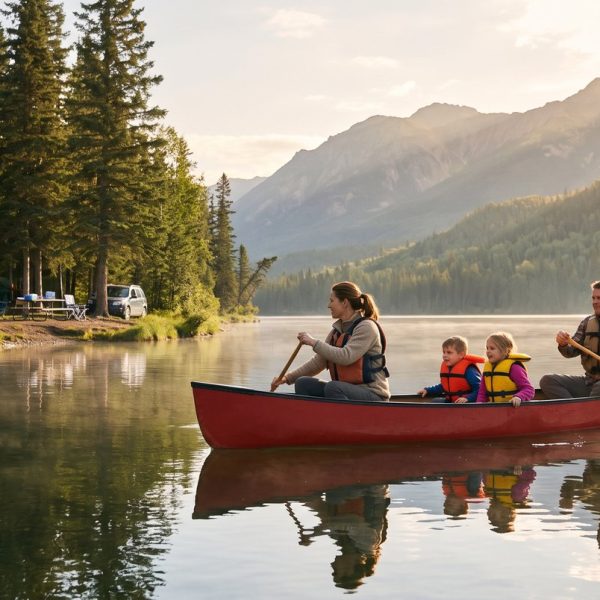
A short trip in a canoe or kayak is a wonderful way for kids to explore the shoreline. For a first outing:
- Choose calm water in the morning, before the wind picks up.
- Stay close to the shore and plan a route of no more than an hour.
- Seat children in the middle of a canoe, with one adult at each end.
- Give kids a small paddle and a job, like spotting birds or counting turtles.
- Bring water, snacks, sunscreen and a dry bag with spare clothes.
Many lakeside campgrounds rent canoes and kayaks by the hour, and some offer short guided paddles for families. These are a great way to try paddling before buying any gear.
Fun Water Activities for Kids
- Skipping stones and counting the jumps
- Building rock dams or sand castles
- Searching for crabs, snails or tadpoles in the shallows
- Floating leaf boats down a gentle stream
- Catch-and-release fishing with a simple rod, where rules allow
- Watching the sunset over the water with hot chocolate
Watch the Weather on the Water
Weather changes faster on open water than on land. Check the forecast before every paddle or swim, and keep an eye on the sky. If you hear thunder or see lightning, get everyone out of the water and off the beach right away, and wait at least 30 minutes after the last thunder before going back. Strong wind can also push a small boat away from shore, so turn back early if the water starts to get choppy.
Packing Extras for Water Camping
Water trips need a few extra items on top of your usual gear: life jackets for each child, water shoes, quick-dry towels, a spare set of dry clothes for everyone, a clothesline and pegs, sun hats, reef-safe sunscreen and a dry bag for phones and car keys. Wet kids get cold quickly, even in summer, so warm layers for the evening are essential.
Protect the Water You Enjoy
Teach kids to leave the shoreline as they found it. Wash dishes away from the water, using only small amounts of biodegradable soap. Never pour leftover food or soapy water into a lake or river. Take all trash home, and look but do not disturb animals and their homes. Clean water is what makes these places special.
Plan the Rest of the Trip
Water will likely be the highlight, but kids also need quiet time, good meals and a comfortable night's sleep. General advice for camping with children, such as choosing a camping style that suits their ages, packing together and keeping a trip journal, applies here as well.
Memories That Shine Like Water
A lakeside morning, a first paddle or a sunset on the beach can become a moment your children remember for life. Choose a calm, family-friendly site, follow clear water safety rules and pack for wet adventures. Then let the kids splash, explore and fall asleep to the sound of the water.